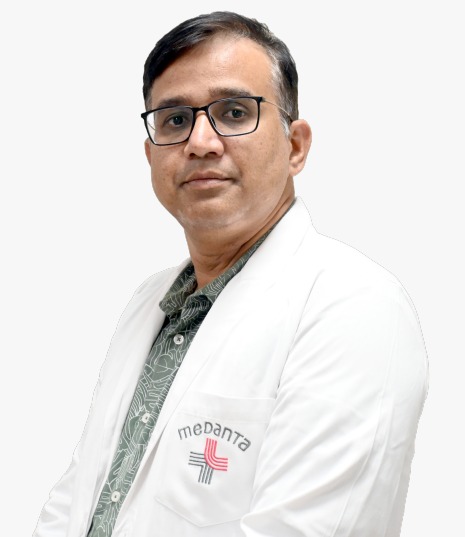
Dr. Kamlesh Singh Bhaisora, Director, Neurosurgery at Medanta Lucknow
Lucknow, 3 August, 2026: Brain tumours are abnormal growths that develop in the brain and may be either non-cancerous (benign) or cancerous (malignant). In India, an estimated 40,000 new cases of brain tumours are diagnosed every year. While they can occur at any age, they are most commonly seen in adults between 20 and 60 years of age.

Many people believe that persistent headaches are the hallmark of a brain tumour. While headaches can certainly occur, they are not always the earliest or the most reliable warning sign. One of the biggest misconceptions is that every brain tumour causes severe headaches. In reality, the symptoms depend on where the tumour is located in the brain. In some patients, changes in vision, balance, speech or behaviour may appear much before headaches develop.
The brain sits within the rigid skull, so any abnormal growth can increase pressure inside the skull and cause headaches. However, if a tumour grows slowly, the brain often adapts to this gradual increase in pressure. As a result, some patients may not experience headaches until the tumour has become quite large. This is why it is important to pay attention to other neurological symptoms that may appear much earlier.
Changes in vision are often among the first symptoms. These may include blurred or double vision, gradual loss of side vision, or frequent changes in spectacle prescription without satisfactory improvement. Such symptoms can occur when a tumour affects the optic nerve or the areas of the brain responsible for vision.
Some people may also notice changes in their personality or behaviour. Increased forgetfulness, poor concentration, unusual irritability or changes in judgement can occur when tumours affect the frontal lobe, which controls behaviour, emotions and decision-making. Problems with balance and coordination or the onset of seizures in adulthood are other possible warning signs.
Patients often delay seeking medical attention because they attribute symptoms such as dizziness, forgetfulness or changes in vision to stress, ageing or fatigue. If these symptoms persist or progressively worsen, they should not be ignored. An early consultation can make a significant difference.

A diagnosis of a brain tumour can naturally be worrying, but treatment options today are far more advanced than they were even a decade ago. Many brain tumours can be effectively treated, controlled or monitored, especially when detected early.
Dr. Kamlesh Singh Bhaisora, Director, Neurosurgery at Medanta Lucknow said, for many patients, surgery remains the first and most effective treatment. The aim is to remove as much of the tumour as safely possible while preserving important brain functions such as speech, movement and vision. Over the past decade, advances in neurosurgical technology have transformed brain tumour surgery, making it significantly safer and more precise than before. Today, at Medanta surgeons use technologies such as neuronavigation, intraoperative neuromonitoring, fluorescence-guided imaging, intraoperative MRI, computer-assisted surgery and neuroendoscopy to accurately locate tumours, distinguish abnormal tissue from healthy brain tissue and minimise the risk of complications.
Many people still believe that brain tumour surgery is extremely risky, but that is no longer true in most cases. At Medanta, with modern technology, meticulous planning and experienced multidisciplinary teams, we are able to remove many tumours safely while preserving neurological function. Early diagnosis allows us to intervene before permanent damage occurs and significantly improves the chances of a good recovery.
Not every brain tumour requires open surgery — tumours located in highly sensitive areas of the brain, or certain small tumours, may be managed using radiation therapy, chemotherapy, targeted therapies or stereotactic radiosurgery using CyberKnife, a non-invasive treatment that delivers highly focused radiation without opening the skull. The treatment plan is individualised, taking into account the type of tumour, its location and the patient’s overall health.
The important thing is not to ignore persistent neurological symptoms simply because there is no headache. Paying attention to changes in vision, balance, speech, behaviour or the onset of seizures, and seeking timely medical advice, can make a meaningful difference to treatment outcomes and quality of life. Dr. Kamlesh Singh Bhaisora is a panellist at the upcoming Medanta Neuro Conclave organised by Medanta Lucknow on August 09, 2026.